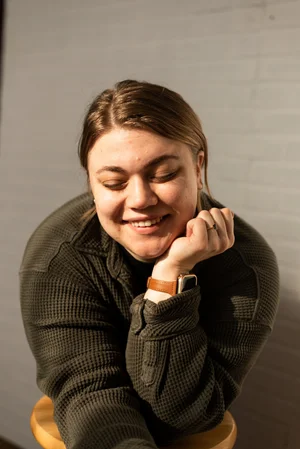
My Feminist Origin Story — Evansville Indiana Boudoir Photographer
I was in Barnes and Noble one afternoon in the summer of 2019, and as if on autopilot, I went up the escalator, rounded the corner past all my fav gushy vampire novels (you know the ones), and found a new shelf of go-to’s that I really love. It’s this stack where women’s studies and LGBT studies meet. I was searching for the latest additions to my vacation library, which has been an annual ritual for me since I was 15. I had a list of some books I was looking for, but besides those, I was searching for something that jumped out at me begging for me to read it. Then I found Text Me When You Get Home by Kayleen Schaefer. Those six words have left my mouth so many times — when my best friend leaves our game nights, when the girls split up and head our separate ways after a night out, even after grabbing a quick lunch with a friend. I read the title and just had to pick it up and flip through it, and I was immediately hooked. I felt like I couldn’t keep living without reading this book, and it was amazing. I recommend it to everyone ever, especially if you identify as a woman.
I devoured this book in maybe a week, if I’m being generous. Then I went through it again and marked the shit out of it. I underlined passages, made notes in the margins, and put stars next to things that really hit me. Ugh, I just loved it. And even better, it got me thinking about my own friendships, especially the ones with women who have been with me throughout my life, and how those relationships affects my friendships today. I found myself turning the last few pages of the book for the last time, feeling that very familiar melancholy when a book is almost finished, but leaving with a better understanding of myself that I want to share with you. It’s valuable, it’s powerful, and I want to hear yours too. This is my feminist origin story.

“In going back and thinking about my friendships and hearing about other women's, I see this: Our friends are not our second choices. They are our dates for Friday nights and for ex-boyfriends' weddings. They are the visitors to our hometowns and hospital rooms. They are the first people we tell about any news, whether it's good, terrible, or mundane. They are our plus ones at office parties. They are the people we're raising children with. They are our advocates, who, no matter what, make us feel like we won't fail. They are the people who will struggle with us and who will stay with us. They are who we text when we get home.”
― Kayleen Schaefer, Text Me When You Get Home: The Evolution and Triumph of Modern Female Friendship
Although my female friendships have always been sacred to me, I’m definitely not exempt from societal conditioning. In high school, I fell into the trap of baseless competition, thinking I wasn’t “like other girls” because I didn’t see myself as being trendy or popular. I fell prey to the misogyny that’s so imbedded in our culture that tells girls that there’s only room for so many of us at the table. As I grew up, I realized that I am exactly like other girls — I am the product of every woman I have ever admired, befriended, and loved. My life has been shaped largely by women; strong women. Women who are independent, who know their worth, who are courageous, intelligent badasses. From the time I was born, I was quite literally surrounded by strong women.
Those same women, whether they knew it or not, were teaching me that female friendships are some of the most important and foundational relationships in my life.
They didn’t pit me against other girls; they encouraged deep friendship and modeled it for me through their own friendships. My nan and her best friend went on vacations together, always talked on the phone, and she has the tightest bond with her daughters. My mom has always taken time to support the bond she has with her friends — from college, from work, and with family. My aunt Julie got married when I was almost 16, and was the biggest role model for me as I was growing up. My whole life has been spent knowing her as an independent woman who wouldn’t settle, who took care of herself, who enjoyed being alone. Her friends were always around, especially as I got older — and she’s always been one of my best friends too. So many of my close friendships now, I’m realizing, are modeled after my friendship with my aunt. Supportive, always showing up for each other, pushing each other to be better people — real unconditional love.
The feminist I am today has been shaped by not only these incredible women who raised me, but also the girls and women I met as I grew up. Throughout my life, the fact has remained that my friendships are of the highest priority to me.
From standing up for each other in high school, supporting each other through the breakups and long nights, to watching each others’ backs on nights out and making sure we each get home safely. To hear the comforting phrase coming from a friend’s lips — I’ll go with you — goes beyond physical presence. It’s the promise of emotional support, someone to experience life with, and deeply knowing that you’re never alone.
I’m certainly not the only woman who’s been subject to violence from men — from being catcalled, harassed, touched without consent, and followed… the list goes on and on. Every friend I have has stories similar to mine. We’re all too familiar with having to deal with people who cross boundaries, manipulate, and flat out make us uncomfortable. For as long as I’ve known my friends are a priority, I’ve also known that there are people in the world, especially men, who don’t give a shit about how their actions affect me or my friends. Since I’ve been young, I’ve been invested in protecting my friends, making sure we’re looking out for each other, and standing in solidarity on all fronts.
As I’ve gotten older, that strong girl code has translated into a passion for human rights and equity for all people.
As I began college, this started with educating myself about politics and our history as a nation, staying up to date with current events, learning about the privileges that I hold, and figuring out what I can contribute to a fight that is seemingly never-ending, especially for my sisters who live at different intersections of oppression than I do. I believe that it starts with education; prioritizing a lifetime of learning and growing, and turning that knowledge into action. It’s up to us. Especially those of us who have privileges that others might not.
I believe that it’s important for me to be an activist. I’m not one to sit on the sidelines and hope that things change. Whether that looks like being vocal on the platforms I have, talking to friends and family about things that are important to me, donating money to organizations that support my community and changes that need to be made, or exercising my right to vote and calling my elected officials to make my voice heard. Now more than ever it is so important to be active in the never-ending fight for equity and equality.
Truly, deeply, from me to you — I will always go with you.