The Perfect Body Myth – Evansville Indiana Boudoir Photographer
If you’ve ever thought you need to change your body before booking a boudoir session, you’re not alone.
Scrolling through Pinterest, lingerie stores, and picture-perfect social media feeds can make it feel like you’re the odd one out, like you could never look like the people you see in the photos or wear those outfits with the same kind of confidence. Somewhere along the way, we were sold this idea that there’s a specific look you need before you’re allowed to be seen in photos. I see too many women hiding behind their kids in photos, taking 100 selfies to try to find that one specific angle, or just not being in photos at all, like they weren’t at the function at all. Invisible.
We think we have to be thin, perfectly proportioned, have gravity-defying boobs and long perfectly styled hair… no stretch marks, no cellulite, no acne, no signs of life anywhere to be seen.
But real people don’t look like that.
Where the “Perfect Body” idea comes from
You didn’t come up with this idea of an “ideal body” on your own, and it’s not your fault that it’s stuck in your brain as something to strive for. We see it reinforced everywhere. Lingerie fashion shows (especially the ones with the wings), curated Instagram feeds, photos that have been Photoshopped and Facetuned to hell and back, and messaging we’ve heard for years about “problem areas” like our thighs, stomachs, arms, double chins—basically anything that makes a body look like a human body.
There’s so much out there subtly (and not so subtly) telling women that we’re not allowed to look human. That we’re supposed to be smooth, perfectly proportioned, and glammed up versions of ourselves at all times.
I think that line of thinking sucks. It’s restrictive, and it keeps us stuck.
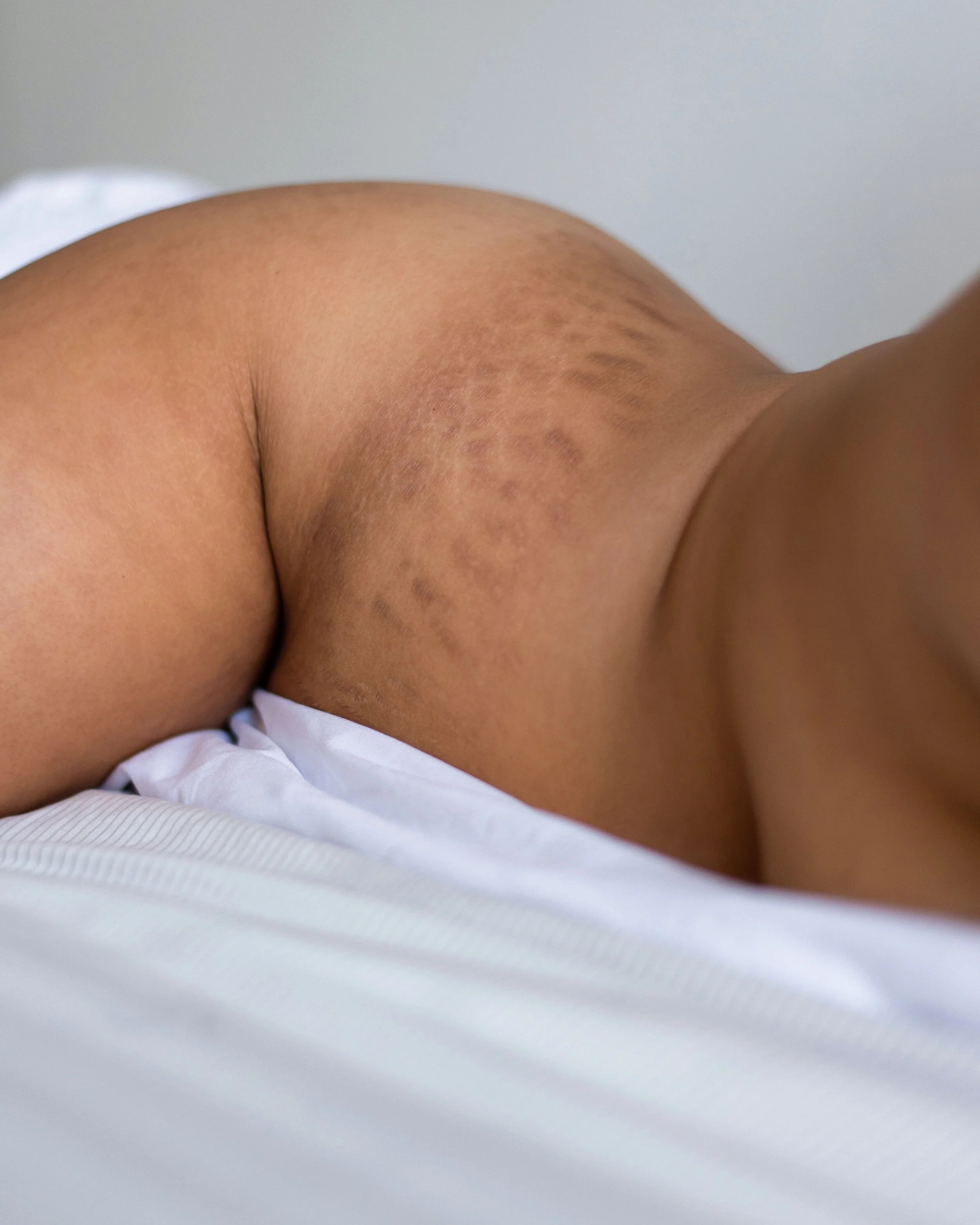
You’re allowed to exist as a whole person in a human body!! Stretch marks, cellulite, body hair, wrinkles, softness—none of that is a flaw.
And something else that we often forget is that most of the images you’re comparing yourself to aren’t even real in the way you think they are.
You don’t see the unedited version. You don’t see the way someone is twisting or holding tension in their body to create a certain shape, the same person from a different angle, or the behind the scenes. You don’t see the outfits clipped in the back or the skin texture that gets edited out afterward.
So what you’re really doing is comparing your real, everyday self—the version of you that exists in the mirror—to a carefully lit, perfectly posed, and expertly edited image that was created to sell you something.
And of course that comparison doesn’t feel good. It was never meant to; it was created to sell you something.
What I actually see in my studio
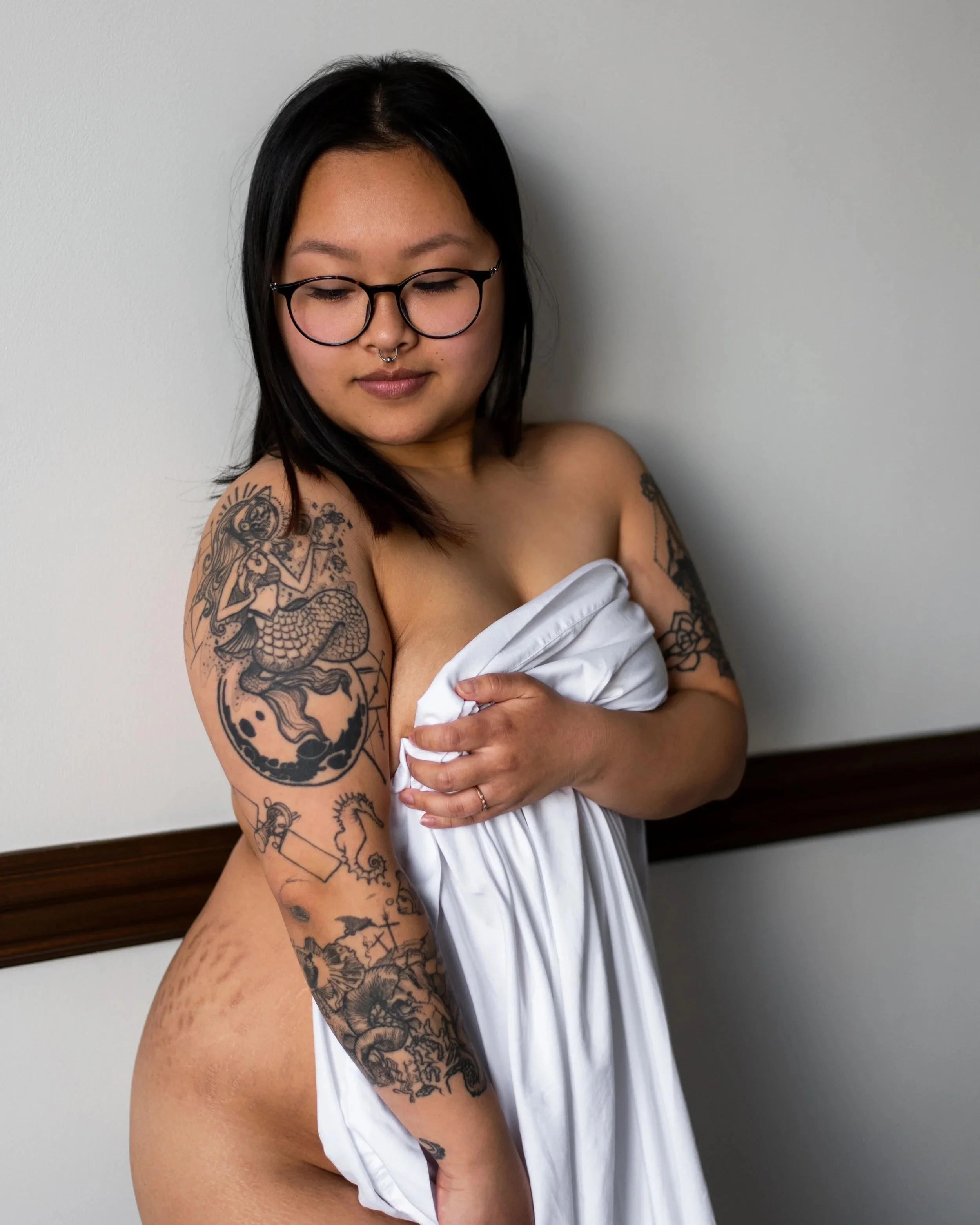
The people in front of my camera aren’t models. They’re normal people just like you and me.
Every person who walks into my studio looks different. Different bodies, different stories, different reasons for being here. And almost all of them walk in feeling at least a little self-conscious of their body.
Because it’s not just about how you look, it’s about how you think you’re being perceived by someone else. (I know that because all of this societal conditioning and “perfect body” conditioning is also in my brain, telling me that I need to be all these things too.)
It’s so easy to get in your head about the things you wish were different. A flatter stomach. Less cellulite. Smoother skin. Blah blah blah, the list could go on forever about all the things that we wish were different about ourselves.
But what I see isn’t the same as what you see because you’re looking for flaws. I’m not.
I notice how your smile lights up your whole face or the way your nose crinkles when you laugh. I see the quiet confidence that starts to come through in your eyes as you settle in. I can see the shape of your body, but not as something to fix; as something that already works. I see all the things about you that are beautiful.
I see your softness, your strength, your presence.
And those things you’re worried about aren’t the defining thing in your photos. Not even close.