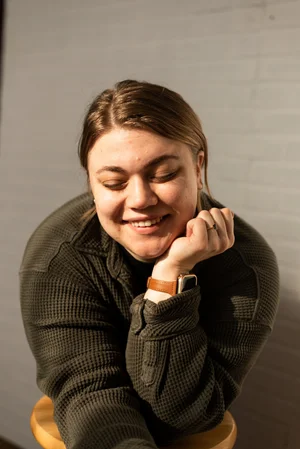
Episode Summary
I’m so excited to be back with this first episode of the rebranded Not So Ladylike podcast where I really dive into what it means to live honestly and take up space. In between my musings about the expectations placed on us, my mom and I look back at our shared history of being outspoken and independent, tracing those not so ladylike traits through a lineage of strong women in our family. I also share how these themes of authenticity over agreeableness shape my work as a boudoir photographer, where I encourage women to stop performing and just show up as their real selves
We jump in the deep end straightaway by talking about toeing the line between too-much and not-enough, and the never-ending expectations, and how traits like confidence and assertiveness are praised in boys but labeled negatively with words like intimidating or bossy in girls (2:08)
Mom shared a story about being 14 and wanting to be an altar girl… but was told no just because she wasn't a boy (9:25) and we talked abouthow much has changed since my mom was growing up in the late 60s, a time when women often couldn't even have their own credit cards or bank accounts. It really puts into perspective how the "outdated traditions" she fought against, like the altar boy rule, were part of a much larger system.
We talked about the women who came before us, like my great-grandmother Mom Carter who was a real life Rosie the Riveter, and my Aunt Carol, who taught us that being called "opinionated" is actually a compliment (12:19)
I reflected on how being not so ladylike isn't about rejecting gender roles just to be contrarian, but about celebrating the choice to be whoever you want to be (20:01)
Listen Now (on Spotify)
Episode Transcript
In the words of Taylor Swift, it's been a long time comin’ and I am back! Before we get into today's episode, I want to do a little housekeeping since you haven't heard me in your ears in a while and let you know my plans for the podcast moving forward so, you know what to expect here. First of all, what is Not So Ladylike? This show explores what it means to live honestly, take up space, and question the rules we never agreed to in the first place. My plan is to release episodes on a monthly basis? Question mark? And to bring you a mixture of reflective solo episodes about me and my life, research-based episodes about historical women who inspire me and blaze trails in their fields to make way for progress and possibility, and guest interviews with women who inspire me and embody what Not So Ladylike is all about. And it felt wrong to jump right back in without starting with the meaning behind the name–because I think it says a lot about the kinds of conversations I want to have and the kinds of stories I care about telling.
I'm Eleanor Elaine, and you're listening to Not So Ladylike.
Being a woman comes with expectations and one of those is often to be seen as “ladylike”. To be well-mannered, graceful, poised, delicate, agreeable, quiet, submissive… all of those kind of things. And of course, you know me, I had to do some research. According to Merriam-Webster, the first recorded use of the word “ladylike” dates back to 1534. Other notable things that happened around this time in history? Lil English Reformation, when Henry VIII made himself the head of the Church of England. So, needless to say, this was not a great time for women. Merriam-Webster defined the words “ladylike” as: being of a kind traditionally considered suitable to or attractive for a woman.
And if you are being ladylike, you probably wouldn't ask questions like: who decides what's suitable for a woman to do or be? Where do those guidelines come from? And why are men held to a different standard than women?
There are so many expectations for women and girls dictating how we're supposed to move through the world. Don't be too loud. Don't take up too much space. Don't show too much skin. Don't be too smart; it's intimidating. You seem arrogant. Don't be too funny; men don't like funny women. Smile more; you have resting bitch face. It's a never-ending dance of towing the invisible line between being too much and not enough. Not to mention that a lot of these traits don't come with a negative connotation when boys exhibit them, but become negative when they exist in girls. He's a natural leader, but she's too bossy. He's confident, but she's intimidating. He's competitive, but she's selfish.
I've never been very good at being ladylike, obviously. I've always been opinionated, independent, and stubborn. And I'm not one to shy away from speaking my mind. I'm not afraid of confrontation or challenging things that don't make sense to me. I remember even as a kid, I was always pushing back against these kind of unspoken expectations. In elementary school, you know how teachers ask for strong boys to help carry chairs or move things around? I would always volunteer because I saw myself as being just as capable as the boys were. (And to be honest, probably more capable most of the time. I'm an eldest daughter after all.) Even then, it felt weird to me that girls were automatically overlooked for things involving strength. And that's just one example of the subliminal messaging that girls aren't strong.
There are many moments like that in my life that really shaped me as I started realizing how many invisible rules exist around what's considered acceptable, especially for women and girls. And I realized I actually really like testing those boundaries. Not necessarily for the sake of rebellion itself, but because a lot of these rules feel arbitrary and unfair. Actually, while we're on this topic, let's call my mom and see what she has to say about all this.
Ellie: Okay. Hi, Mom!
Mom: Hi!
Ellie: Are you so excited to be on the podcast?
Mom: I want to be on every time now. I love it!
Ellie: Okay, so first of all, do you have memories of me as a kid being not so ladylike, like being outspoken or independent or bossy?
Mom: Well, yeah. The apple doesn't fall far from the tree, does it? Um, I have one particular memory when you were in elementary school and I think that really played a big role in learning about speaking out. Sometimes when not to. Um, which I don't know that rule. I don't really know that rule myself. Okay. So, you know, you were reading from kindergarten. You were reading well above your grade level and you even read a story in the Christmas play. And you loved to read. You loved people to read to you. So, um, I'm trying to, you'll have to remind me when you think this was, but, I think it was first or second grade. You're taken to the library for story hour. All the children are on the floor sitting around this teaching assistant person and she's reading a story and you're enjoying the story and you make a comment and I believe it went something like you were agreeing or you were talking about what she was saying, but you spoke out loud, but because you were having a good time. And this person decided that you were making fun of her. I think it instilled in you when you speak up, there can be consequences and also it probably started showing you you had a voice. Even though it was a negative impact that time and of course you were supported by your family, mama stomped up to the school—not having that this person was going to tell my second grader that you hurt her feelings.
Ellie: I remember that very clearly. I don't remember you coming up to the school.
Mom: Oh, yeah. I had a meeting with the principal. Uh-huh.
Ellie: I remember going to the principal.
Mom: Yes. ‘Cause they acted like you were the one at fault. So, you know, you also got to see your mom in action.
Ellie: So, from my memory: how that went down, my best friend Jessica and I were in the back of the room. The librarian was reading something. I was in, I think second or third grade. I remember I was in Mrs. Harris' class and she [the librarian] was reading something and we were like repeating the parts that we thought were especially funny to each other and laughing. And I remember getting called to the principal's office and he told me that we were mocking the librarian and he went into the library after school and she was in there crying because we were bullying her and we hurt her feelings, which was absolutely not the case at all. We just thought it was a good book and we were doing what kids do and making each other laugh about it. And I don't remember anything after that, but I remember getting called to the principal's office and being like, "Oh my god, this is the worst day of my life. This is the worst thing that could possibly happen to me today”
Mom: And my chest is exploding right now cuz I want to march right back up there and have this conversation again!
Ellie: I remember I—I mean as a kid, even though I was bossy and independent, I was very much a rule follower and doing something to get in trouble was like the worst thing that could happen to me. And so getting called to the principal's office when I was a good kid and like, very much had that as part of my identity of being a rule follower, being a good kid was so devastating. But then once I heard what was going on, I remember being like—I felt like it was so unfair and so unjustified. And I think you're right. I think that was probably one of the first times that I realized that consequences of your actions and of speaking out don't always align with what is like, just or fair.
Mom: Exactly.
Ellie: It didn't stop me.
Mom: Yeah. And I think it also instilled going forward that your voice could matter also.
Ellie: Yeah. Well, and like you said, because after that, after you had the conversation with the principal, I didn't go back to the library. I stayed in the room while everyone else went to library and I did extra homework for fun. I put up bulletin boards. I helped the teacher.
Mom: And you had a strong teacher too that was outspoken and all these positive things that I think about when I think of her.
Ellie: Yeah. Me, too.
Mom: And she let you know you didn't do anything wrong and she supported you.
Ellie: I think that's true. And I think having you and her go to bat for me—and, I think as an adult, it's easy to believe another adult over an 8-year-old, generally speaking. And looking back, I can see the impact that it had on me. Having these adults who I admire and trust and love believe me and go to bat for me in that way really mattered. And especially, again, strong women who believed what I was saying. So obviously, I know I get my attitude from you.
Mom: Correct. That's for sure.
Ellie: So, what are some memories that you have from your childhood when you embodied those same qualities that you see in me?
Mom: Oh, there's so many things because all my life I've been told these things about me being outspoken. My big memory is we went to religious class because we were Catholic. All those classes built upon us being confirmed when we were seniors. But there were altar boys that assisted the priest during mass. So, my friend and I wanted to be altar girls. There was nothing that we knew we couldn't do with how they assisted the priest and they wouldn't let us. I was so mad because I could not see a reason why because there wasn't a good reason.
Ellie: No, it was just because you were not a boy?
Mom: Yes, it was just because I wasn't a boy and I was outraged and I let them know.
Ellie: And you were how old?
Mom: I'm going to say… like 14.
Ellie: I feel like that's around the time that I also started rebelling more against things like that and using my voice more.
Mom: Yeah, that's right. I can remember things—you using your voice.
Ellie: So, you spoke up and you said this is ridiculous.
Mom: We were outraged. Why can't we do this? Why can't we be a part of this? But guess what? Today there are altar girls and I think I helped mold the girls of the future. So, I'm happy about that.
Ellie: Yeah. I think it's really interesting to see how quickly things can change.
Mom: Definitely.
Ellie: And I think a lot about like when you were growing up, you know, born in the late 60s, women couldn't have their own credit cards, have their own bank account, things like that.
Mom: Exactly.
Ellie: To you being a teenager, not able to be an altar girl–things that girls now don't even consider that that would not be an option because people like you spoke up and truly did pave the way for girls now to be able to do whatever they want to do, genuinely.
Mom: Absolutely. And you know looking back, I thought in the 80s as a teenager, I could do anything I ever wanted to do.
Ellie: Yeah
Mom: And I did think that and it was true in many respects. And then something that you trust when you're in religious class that you're going to be cared for and backed up and these things and then they say no.
Ellie: Yeah. And you expect to be treated equally.
Mom: Exactly.
Ellie: I assume though, co-ed classes, right?
Mom: Yes! Yes. Definitely
Ellie: So girls and boys, same age, learning the same things. There's no reason why you shouldn't be able to except for outdated traditions.
Mom: Right. Outdated traditions. Traditions that don't make sense.
Ellie: I agree. So obviously we are strong women who come from a long line of strong women and eldest daughters even. Why do you think that's important? How has that lineage impacted our outlook, do you think?
Mom: Well, when you have family members especially that you're close to and they are strong, empowered women like Mom Carter [my great grandmother]—she did so many things in her lifetime that showed me and you and our whole family and the world what she could do. You know, during the war, she worked as a Rosie the Riveter person. When she had kids, she worked second shift and she managed our Dad Carter's trucking business and did all the paperwork plus take care of the family and cook and do the laundry and all the things that back then, the husband didn't help with. And through the years she just did so many things that were just very empowering. And then, you know, my whole life I was compared to my aunt because our personalities were so much the same. And I think some people when I would blurt things out or be outraged about something, they would call me Aunt Carol. And sometimes it was meant as a negative connotation, but I always was empowered and said thank you because I wanted to be like her. I wanted to be outspoken. I wanted to do anything that I wanted to do and I knew I could.
Ellie: Yeah. It's another one of those instances where even though Aunt Carol was so graceful and had a lot of the qualities of being ladylike, you know, that you would immediately think of–being graceful, being poised, you know, things like that–she definitely was never afraid to speak her mind. And us being compared to Aunt Carol would come with that negative connotation of, you know, you're being too opinionated, you're too outspoken. But us being the way we are, I think that's definitely a compliment more often than not because we don't want to be people who just sweep things under the rug or go with the flow just in order to not rock the boat.
Mom: Exactly. And really, I've been like that my whole life from the time I was a child. You know, your Nan and Pop have told me that, you know, I've had the same personality from the time I was a six-month-old. And boy, they could tell you stories, but I've been like that my whole life. And I did not change that in college. I did not change that when I went to the workforce. What you see is what you get with me. And if I have something to say, I'm going to say it.
Ellie: Well, and that's something that you've really instilled in me, too, just by being the person you are, that it's okay to speak your mind and to not be afraid to say what you actually think.
Mom: Good. I'm happy about that.
Ellie: But I think there's a lot to be said for being in a supportive family where we are all able to speak our minds and know that, you know, and we all respect each other and love each other and exactly, not being told to be quieter or to, you know, keep it to myself or bite my tongue, you know, never anything like that.
Mom: And I don't usually bite my tongue when I'm reacting. And sometimes I have to take a step back, but I never want to not speak my mind.
Ellie: No, your foot does fit perfectly in your mouth, doesn't it?
Mom: Oh my gosh. Perfectly. Both of them fit perfectly. And it's a very frequent occurrence. And that's okay.
Ellie: It's okay. Yeah. Before I let you go, what does it mean to you to be not so ladylike?
Mom: It means being myself. And yes, sometimes I do have to know my audience, but that's my personality–to be outspoken, to stand up for what I believe in, to show especially you and your brother, that it's okay to be confident.
Ellie: I've definitely learned from you how to not dilute who I am. I really admire that about you that no matter what room you're in or who you're speaking to you are who you are.
Mom: Thank you.
Ellie: Thank you.
Mom: And I'm so proud of you. Not because you act like me, but because I know you're going to always stand up for yourself. And through that, you're a strong businesswoman. You're a strong wife. You're a strong friend. You're a strong daughter and granddaughter and niece and sister. And I can go on and on.
Ellie: Has any of that affected your own identity? Does it make you see yourself in a more positive light?
Mom: Well, yes, it definitely does. Um, because I see how my actions have affected you, you know, over your lifetime. And it just makes me proud that you know and from a young age you knew it was okay to speak your mind, be bold. Um, that you're confident and you make a big impression and a positive one at that on the people that you encounter in your life. And when you become a mom, the cycle begins again. Right?
Ellie: That's right. I feel like having someone who you love so unconditionally have those same traits that you have that might come with a negative connotation to some people allows you to see them with more kindness in yourself.
Mom: Agree.
Ellie: Just the way we like it.
Mom: Just the way we like it!
Ellie: Well, thanks for being on, Mom. I love you so much.
Mom: I love you and I'm so proud of you.
Ellie: Okay, I'll talk to you later.
Mom: Love you. Bye!
Huge thanks to my mom for coming on the show and sharing so much with us. That was so much fun to get to talk to her about this. To sum it up, I think this is really what Not So Ladylike is all about. It’s not about rejecting femininity or trying to be contrarian all the time. It’s about living honestly and deciding for yourself what you value instead of blindly following expectations just because they exist. Like in the case of my mom and the altar girls.
This is the crux of feminism, though. We aren't railing against gender norms and traditional roles. We celebrate women having the choice to do whatever they want with their lives. And it feels more important to me to be authentic than agreeable just for the sake of keeping the peace. I care so much more about being the most honest version of myself rather than being the most liked version of myself. And as you heard from the conversation with my mom, I've never liked rules that don't make sense or systems that expect people to shrink themselves to fit inside them—just like her.
And to be honest, that’s also why this conversation belongs so deeply in my work as a boudoir photographer now. Because I'm not asking women to perform a version of femininity that they don't actually connect with. I'm not trying to fit you into a neat box wrapped in a bow or capture some polished perfected version of womanhood. So many people walk into my studio thinking they need to be sexy or confident in this very specific performative way, like they need to show up as a flawless runway winged version of themselves. But the most beautiful moments happen when you let yourself relax and show up honestly. That's when I get to see the real version of you, your actual energy, your personality, your softness, your humor, your intensity, whatever it is that makes you you. And I get to reflect all those things right back to you.
And that's really what this podcast is about, too. Conversations about identity, self-worth, confidence all through the lens of people learning to live more honestly and take up space more fully. I want to tell stories about women who forged their own paths, who question expectations, who stopped censoring themselves to fit into molds that were never designed for them in the first place.
And more than anything else, I hope this podcast makes you feel seen. I hope it helps you feel more empowered, more curious, and more honest with yourself.
Thank you so much for listening to this episode of Not So Ladylike. You can follow me on Instagram @eleanorelainephoto and you can find the show notes for today's episode at eleanorelainephoto.com/episodes. And as always, those links will be in the description for you as well. Before you go, do me a favor and leave a five-star review wherever you're listening. And share this episode with a friend if you enjoyed it! Any friend of yours is obviously a friend of mine. I will be back soon with another episode for you. But thank you so much for hanging out here with me in the meantime. Loveyoubyeeee!